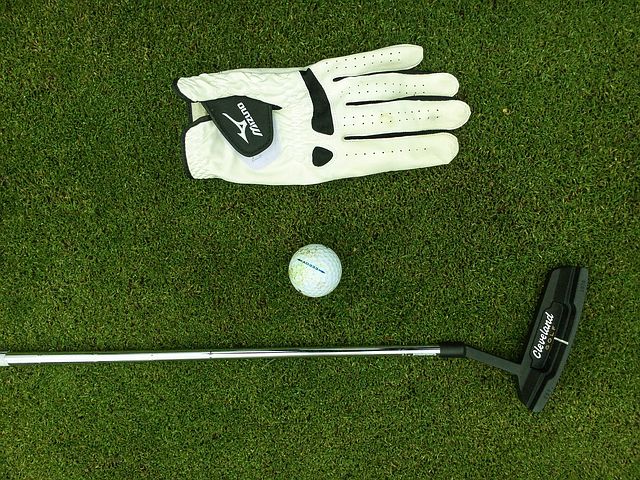
There is no way that you can separate a good fitness golf tip from a good well executed golf swing. The golf swing is the most strenuous aspect of the game and a good golf fitness tip is one that helps you improve on your golf swing.
The impact and follow-through is just as important.
The basics of a proper golf swing are universal. A proper golf swing actually consists of three separate segments that every golfer should work on in their efforts to develop and improve their golf swing. A good golf fitness tip must be able to help a golfer achieve this objective.
The three segments of a golf swing are the backswing, the downswing and finally the impact and follow-through.
A useful golf fitness tip should be able to help as you carefully work on each of the three segments separately in an effort to get the right positions and movements. This is how golfers work on improving their golf swings.
Every proper golf swing starts at the legs and the hips and not the arms where many golfers place most of their attention and emphasis. This is precisely the reason why proper exercising that is golf-specific usually has such a huge impact on most people in terms of dramatically improving their golf games. A good golf fitness tip can address any of the golf muscles involved in this particular part of the golf swing.
The golf fitness tip can also address golf conditioning. Golf conditioning exercises have the effect of preparing the individual muscles and parts of the body used in a golf swing, so that your movements and follow-through come almost effortlessly and as naturally as possible. Without exercise, the proper golf swing movements only work to strain unprepared, weak and therefore tense muscles.
Although golf has always been viewed as a leisure sport, the truth of the matter is that the modern golf player has to condition his body and muscles in many parts of his body, not just arms.
Fitness golf tips can play a major role in improving the golf swing.
We invite you to check out our blog
Join our newsletter as we have some free swag coming out later this season!
Understanding the basics to a better golf grip can significantly lower your scores and best of all, improve your control. Starting with the left hand, this hand is responsible for gripping the club handle. The fingers of the left hand begin the base grip. This is of course aimed at right handed golfers. Those who are left handed golfers would switch the entire process to adjust to their predominant hand.
Most people have heard the analogy that you want to grip the golf club as though you are shaking hands with it. While it is a good analogy in getting people to reach for the club in the appropriate manner, “Correcting Your Golf Grip To Improve Your Game” there is a lot of play in that golfing advice. Let’s add a more specific notion of shaking hands with the golf club and meeting the knuckles of your left middle joint of the forefinger reaching approximately two inches from the top of the club handle and the bottom three fingers approaching the base of the club.
The right hand is then going to join in on the action and take its grasp around the golf handle. The club handle should rest right at the knuckle/palm intersection of the hand. You don’t want the club to be too far toward the finger tips and you want the club to rest firmly toward the base of the fingers toward the hand.
Now you successfully have both hands on the club. Looking down at their position you should be able to find a V shape created by the thumb and forefinger on the left hand. This V shape should have a direction. It should be aimed toward the right shoulder, pointing right about the middle of the shoulder to be precise. Adjust your grip until you have the club lying toward the base of your fingers toward the palm and the V shape of the left thumb and forefinger pointing directly toward the middle of the right shoulder. This seems like an awkward position, but once you adjust the grip accordingly, it should actually have a mildly normal feel to it. Get comfortable with it and practice getting just those basics of the golf grip down without having to spend twenty minutes adjusting your grip every time you pick up a club. You should be able to get it to the point where this part of gripping the golf club is natural and automatic.
“Correcting Your Golf Grip To Improve Your Game” Once you have mastered this basic approach to gripping the golf club, start to take notice of some finer details in your grip. There should be a little flex to your left wrist. The wrist should take on a mild angle that resembles a “cupping” angle. Relax your wrists until you find that motion and angle.
The V shape that your right forefinger and thumb produce should be aimed up toward the right ear. All of these “aiming” suggestions are assuming that you are gripping the golf club in the stance you take just prior to swinging the golf club.
The palm of the right hand is basically responsible for the direction the ball will go once it is in the air. While you are standing their adjusting your grip on your golf club and finding the stance that works best for you, you want to keep in mind that your goal is to “aim” the golf ball with the palm of your right hand. This of course only works if your grip on the golf club is accurate and your hands mold together as one cohesive unit.
When gripping your golf club, you want your hands to be able to work together. Aside from that, you want your hands to work in sync with the rest of your body. By developing a natural but distinct grip on the golf club you can encourage your entire body to work cohesively all the way through to the end of the golf club and produce a swing that will carry the ball both the distance and the direction you are aiming for.
Practice your swing often and carry your follow through all the way through your body. This will help eliminate chop shots that result from an uncomfortable grip on the golf club. Spending a little time at the driving range is always a good idea when making even minor adjustments to your swing. Practicing the adjustments for the first time on the fairway with a bunch of golfing associates is typically a frustrating maneuver.
White Knuckles “Correcting Your Golf Grip To Improve Your Game”
White knuckling the club is a common mistake when learning new procedures to gripping the golf club. A golfer tends to get nervous about his new technique or small adjustments and wraps the club in an all out death grip. Relax a little and enjoy the challenge of creating a better golf swing.
On the opposite end of the scale avoid gripping the golf club with limp hands. This eliminates the control you are gaining by adjusting your grip in the first place and creates a very sloppy swing and follow through.
You want to grip the club firmly in your grasp and hold it with confidence. This confident but relaxed grip can help to flatten the head of the golf club as it makes contact with the golf ball, which can ultimately assist in cleaning up a slice.
Golfing Tips “Correcting Your Golf Grip To Improve Your Game”
The basics of gripping a golf club, while often an ignored or barely recognized intricacy of improving a golf game, is really only the beginning of overhauling an entire golf game. From grips to stances to head movement issues there is a chronic plethora of advice and tips floating around out there on the internet and in golfing magazines. How do you asses which tips are worthwhile and which ones will simply destroy what golf skill you have picked up over time?
Not all golf tips apply to all people. Just because one set of tips is completely useless to you doesn’t mean they won’t help someone else recover a lost game. Every individual’s physical body is different, so sometimes just a small adjustment in the tip makes it a valuable golf tip to add to your game. Perhaps you are taller than average or smaller than average. Most golf tips are written with the average body in mind. If you have particularly long arms, you may have to take that into account as you read through golf tips.
If you have been golfing for years and you have developed particular habits that are hard to break, remember (“Correcting Your Golf Grip To Improve Your Game”)h that often the initial habit breaking period will lead to a decline in your golf game. This is actually true of any sport. If the unusual habit is working well for you, there may not be a need to change it. If it isn’t working well for you and you decide to change it, be patient with yourself. It will take time to see any actual improvement.
We invite you to check out our blog
Join our newsletter as we have some free swag coming out later this season!
The tips available. GolfBuz is building a fabulous resource to quietly improve your golf game and wow your associates out on the fairway. Happy golfing!
Are you looking for better results? To change, we must change out perspective. Good golfers are always ‘in’ the game, especially before each and every shot.
While to the onlookers, this may seem effortless, but there is so much going on in the mind of a golfer.
This reminds of a scene in The Legend of Baggera Vance, where Bobby Jones steps up to the ball, to tee off. Will Smith tells Matt Demon to look at Jone’s eyes, and tells him to observe how he looks at the field. He concentrates, takes his position, takes his practice swings, his mind and body in rhythm. The result is nearly perfect as a drive should be.
This point of view may be far fetched and some may even object to it, but many will find some truth in the statement – Golf is a Zen experience. This is true for all golfers who are good at it, no matter how much they joke around and be goofing off.
Zen is exactly this – being present physically and mentally in each and every moment at all times. As some people call this living life to its fullest, but this feeling is different. Zen is experiencing energy in every moment of life. It’s a feeling of living life to the fullest and appreciating every moment for what is given.
So can we then call Golf, a Zen Experience?
Let’s see…
Zen coincides with Golf in all aspects of the game. When the heart and soul is in the moment, a golfer takes notice of everything around themselves. The player feels the breeze, recognizing its force and direction, but effortlessly. Then they notice the feel of the grass as they walk down the fairway, but they are still not under pressure to be thinking about their shot.
The player will then note the distance to the green, the weather conditions and select appropriate club.
The player will focus on only one thing that the next shot and nothing else, but again without the pressure of thinking about it.
The pressure to perform makes the player tense and this spoils the shot. On the other hand a Zen golfer would be calm and would trust his or her body. Once the mind and body are in sync, and then make the shot.
He is aware that his shot may not be perfect always, as the golfer would have intended. The difference would be in the attitude. For a Zen golfer, a bad or imperfect shot will not affect him at all and he would get ready for the next. But this will definitely adversely affect others, who stress over every shot.
Non-Zen golfer would get bogged down and keep thinking and cursing. These negative thoughts would affect his entire body language and will feel defeated even before the result. Since the body and mind are not in harmony, the entire game after the bad shot will get affected; this would be followed by another bad shot. Any good shot will be looked upon as an accident, luck or a fluke.
Change your perspective – Change your outcome🏆
We invite you to check out our blog
Join our newsletter as we have some free swag coming out later this season!
Every golfer that plays the game is going to find himself in tricky situations – in a bunker, behind a tree, in thick brush, in deep rough – from time to time. It is just the nature of the game, courses are designed to be a challenge to the golfer. Even one of the best golfers in the world, Tiger Woods, is not immune from mistakes, and their often-penalizing consequences.
The first and most important part of dealing with an unfortunate lie is knowing what you can and cannot do with a certain shot. Everyone wants to be a hero, and every golfer wants to make progress toward the hole. However, trying to move in a straight line towards the hole, regardless of the obstacles in the way, can have disastrous consequences. Often times, realizing that a certain shot is beyond your abilities is prudent, and that the smart play is to simply chip back out to the fairway.
Below are a few shots that may help you out of some of those tight situations. Again, you have to know your own game, which means you need to put in the time practicing these shots on the driving range and practice facilities.
If you find yourself off the fairway, and behind a tree, you may want to hit a low hook or a cut around the obstruction. To do this, use your normal golf setup, with a slightly wider stance. Align your body to the side of the obstacle, but slightly turn the club in your hand to cause the clubface to make contact with the ball in the direction that you want it to move. Taking a normal, straight swing, with a slightly twisted club, should produce the action on the ball that you desire.
Another difficult position to be in is in a greenside bunker, at the furthest point away from the hole. You know these – the one’s where you have more sand to hit over than green to land on. This shot should be played slightly differently than a normal sand shot, with the clubface not as opened, the body in a more natural golf swing stance, and the shot itself should be taken with a forceful swing. Remember to finish with a high follow-through.
The buried sand shot – or “fried egg” – is not really as hard to play as it looks. To make the shot work, you must get under the ball, which usually means choosing an area to for the clubface to enter the sand may be about two inches behind the ball. You should take a forceful forceful, downward swing, with a lot of power in right (push) hand. Because of the angle and force of this swing, there will not be much follow through on your swing, there will likely be less sand flying out with the ball, and the ball will have virtually no spin on it.
We invite you to check out our blog
Join our newsletter as we have some free swag coming out later this season!
In the game of golf, golf balls are struck by clubs with the objective of putting the ball in a hole in as few strokes (shots) as possible.  At the beginning of each hole, a ball may be placed upon a tee to steady the ball and help the golfer achieve more loft on his shot.  Off of the tee box, a player must strike the ball as it lies on the ground.  Once a golfer reaches the green, he may choose to utilize a putter, a club with a flat clubface, to roll the ball towards the hole.

In the beginning of golf, in early 1800’s, golf balls were covered with leather and stuffed with goose feathers.  By the mid-1800’s, a harder ball was developed using gutta-percha packing material, commonly found in tree milk.  Through time, the bramble ball was developed, with a hard dimpled cover.  At the turn of the century a rubber ball was developed by the B.F. Goodrich Company, with a hard rubber core wound by rubber threads and covered by a synthetic material.

Today, there are primarily two types of golf balls used in the game: the balata ball and the surlyn ball.  Regardless of the type of ball used, the United States Golf Association (USGA) has regulated conformity among all balls to be played.  The USGA ruled that all balls must be round, no larger than 1.68” in diameter, and may not be heavier than 1.62 oz.

The balata ball is also known as a three-piece ball.  It contains a hard rubber core, is wound by rubber bands and has a cover made of a synthetic material called balata.  Balata is essentially a soft cover that many advanced golfers believe make it easier for them to shape their shots.  The drawback to this softer cover is that it is not very resistant to nicks and cuts throughout repeated use.

The two-piece ball contains a larger rubber core, and a thick cover of a synthetic material called surlyn.  Although this harder cover may make it more difficult to shape shots, and it may create more bounce, it is more durable than the balata ball.  It is also thought that it is more difficult to achieve a desired backspin on the ball with a two-piece ball.

The major manufacturers of golf balls are Titleist, Dunlop, MaxFli, Top Flight, Pinnacle and Precept.  Golf balls are generally packaged in boxes of three called sleeves.  Retailers will typically sell boxes of multiple sleeves of balls, usually in quantities of 15-18.  A box of golf balls normally retails between $20 and $75 depending on the maker and brand.

GolfBuz

We invite you to check out our blog.

Join our newsletter as we have some free swag coming out later this season!
Golf and a successful entrepreneur have more in common than we may think.
The Game Of Golf
A Golfers Dilemma
With so much golf how to’s out there the question arises where to start and what to do.
It seems some are even contradictory.🤔
This is just not a beginners dilemma; it happens to many golfers of all degrees.
See even the pro’s change their swing and how they play golf because, sadly as we age our body changes to some degree. In the game of golf when the body changes, many times it affects our swing.
In businesses it is forever changing so to the same applies.
This is why it’s good to always go back to basics. But do not keep changing it up every two weeks. Here are some tried and true points that will help you on your path to your goal.
Some tried-and-true facts.
1). Identify your problem.
2). Research the solution.
3). Decide on the path taken.
4). Get you mind on board first! Include your mind – reason – just as a placebo has an affect on many things. It does here also. So see, taste, feel in your mind the reality of this. This put’s it out to the universe by visualizing the process and outcome daily – Believe in your training alter when needed. If you see the goal as attainable it will be easier to attain.
#4 Sub note: To achieve your goal faster a quick hack – Give yourself Automation which will give you a lesser degree of failure when in the heat of play. The #4 hack is to build habit. By building habit you install your automation. This helps many successful people handle many complicated actions at once, be it a golf swing or a startup or a fortune 500 company.
5). Apply enough consistency doing what you decided. This will enable the results to be effective.
6). Record your actions. Most improvements come from reflecting on this to better oneself.
7). Point of view, allow yourself to see what another view /angle of your activity is seen as. This by itself has propelled many golfers and very successful kings/Queens in all areas of life and business. Giving fresh perspective and new opportunities for success. In our case successful golf.
8). Association: You will notice in playing golf at your local club, many good golfers choose not to play with a not so good golfer. As some feel it affects their game. This is all in their minds. With confidence this fades away.
Why do I mention this law of association. That in golf you should play with better golfers a few times a week. Their golf will influence you.
This goes for all successful golfers and successful kings/Queens of products or services and aspiring entrepreneurs everywhere.
#8 Sub note: The Hack A quick hack to get to your goal sooner then later is putting number 8 in hyperdrive – #8 Hack is hyper saturation. In golf it is immersing yourself in all about golf while NOT losing your focus on your end goal.
It’s not always a longer drive or a better iron shot. It’s the whole pace and not overreaching ones position to get two the green relying on chance. (ball landing in that perfect spot). Seeing a greater vision is good for you but a plan works best when using your clubs. (in business their team).
Using the right clubs: In business – successful entrepreneurs work through small goals and smaller steps to achieve them. Then by combining the smaller goals to reach the larger goals by doing this one can achieve much more at a faster rate. (Include immersion at all levels.)
Also in golf we have clubs to hit generally certain distances. So to does a business leader use certain people in their team to achieve certain small goals to move in the direction of their green.:-) ⛳️
Learn to play the game to win not drive the ball further.
Instead of Sifting through all the golf improvement information in the world. Just let me know your areas of interest and I will get it right to you! No hype – just make the first step – Contact me
If you wish to rise above the herd in business No hype – I will give you this information – Just make the first step – Contact me.
We invite you to check out our blog.
Join our newsletter as we have some free swag coming out later this season!
Are you seeing the same decrease in your handicap that reflects your hard work and efforts? Do you consistently fall short on your drives or feel exhausted at the end of 18 holes? Do you carry the disappointment of a missed putt over into the next hole? If you are plagued with problems like these then it is time to give your golf game a boost. Change your golf game for the better by focusing on the following five areas: Mental toughness, flexibility, strength, endurance, and nutrition.
Mental Toughness:
Are you still thinking about the drive you sliced on the first hole as you set up to tee off at the second hole? This negative thought pattern will adversely affect your game. How you perceive the situation affects each shot. One way to increase your mental toughness is not to relive missed shots. Visualize a good shot to help erase the missed shot from your mind. “ Another less mentioned but secret that allot of golfers may not know — There are other golfers that boost or lower your ego. Many golfers play the mental game on the other golfer to discourage them due to a bad swing or over boost a good shot in hopes to effect the score of their opponents. Do not let this type of golfer get in your head. Leave the bad shot behind you and leave the boastful ego behind you as well. A high inflated ego falls hard when mistakes are made. (In golf and life). GBuz”
Flexibility:
Have you ever rushed to the golf course, quickly stepped up to the tee and felt stiff when you swung your golf club? Warming up your muscles can help relieve stiffness, but it is better to be more proactive in your approach. Therefore, it is essential to stretch on a regular basis. This allows you to increase and maintain your flexibility. You only need a small investment of your time in order to see significant gains in your range of motion.
Strength:
Have you incorporated strength training into your exercise routine? Many golfers are tempted to swing as hard as possible when hitting the golf ball. There are several adverse side effects of doing this. Your muscles may not be physically prepared for the intense strain and you may become injured. Increasing strength will enable your body to tackle the demands of the golf swing and prepare it for the action ahead.
Endurance:
Do you lose your intensity or feel tired after a few holes? If so, then focus on your endurance. At first glance, golf may not appear to be a game in which aerobic fitness is necessary. However, golfers that walk the course can walk nearly five miles over the course of 18 holes. Try to work in 20-45 minutes, 3-5 days per week of cardiovascular activity.
Nutrition:
Your body needs the proper fuel to work efficiently. Common sense dictates that loading up on junk food is a bad idea. So what exactly should you eat? An optimal sports nutrition menu plan will include high quality carbohydrates, lean protein, fruits, vegetables, and plenty of water.
Take these five facts into account and you’ll likely see better results with your game. It will take some time to make these activities a habit, but will be well worth the effort.
GolfBuz
Stay informed to get on top of your game – Get our newsletter below ⛳️
For a few golfers improving their score is all about making small adjustments in their mechanics that can shave a stroke or two off their already great score, but for the majority of golfers, learning some basic golf tips can knock off several strokes from each round and help them play much better golf very quickly. So here are some tips that have been proven to be very effective in shooting a better golf score for the average golfer. * Get some golf lessons. Yes, you can just go to the driving range and try to do your best on your own, but if you want to make the most progress in the shortest amount of time possible, you need to get at least a few lessons under your belt. It will get you off to a good start and help you enjoy the game instead of just feeling like you are fighting it all the time instead. And there is no substitute for having a qualified teacher give you personal attention and help adjust your swing mechanics in person. * ⛳️ Use enough clubs to get to the hole. It’s amazing how many golfers assume that they can muscle a shot up to the hole and use a club that is one or two clubs too short on their approach shot. Instead, get to know your club distances by going to the driving range first and writing down how far each club length carries for you in distance on the average. Then use that as a guide to help you decide how much club you need to get to your target instead of just using the same club that someone else just used, or making an overly optimistic guess. You can shave lots of strokes off your game if you hit most of your greens instead of come up too short and have to pitch it on all the time.
* ⛳️ If your ball is only a foot or two off the edge of the green putt it instead of using a wedge. A lot of amateur golfers think that they need to use a wedge at all times when they aren’t on the green, but that is not necessarily so. In fact, a lot of golfers would be able to get the ball closer to the hole if they putted the ball instead of pitching it in those situations, especially if your short game is not all that good. So if its within a few feet of the green try the putter first and see if it doesn’t give you better results. * ⛳️ Keep your head as steady as you can in your swing. This is often one of the most common mistakes that golfers make on the backswing. By moving your head this causes quite a few swing flaws that will adversely affect your contact with the ball. Think of your head as the pivot that the rest of your body turns around, almost as if it were nailed into position. Of course, it’s not possible to keep it absolutely still, but the quieter your head is in the swing, the more solid contact you should be able to make with the ball. * ⛳️ Keep your sense of humor. Golf is a trying game even for the best players in the world. So don’t expect to be perfect or even come anywhere close to it. Be able and willing to laugh at yourself and not take yourself or the game too seriously, at least not to the point that it loses its fun for both you and others who are playing with you. A little good humor can go a long way. ⛳️ These tips and suggestions may seem very simple, and for the most part they are, but if you put them in practice you can be sure of both shooting a lower score and having fun every time out on the course.
How to beat the golfer that bombs the ball 300 plus yards. Hit it straight! Nothing gets inside a long hitters head faster then a fairway hitting opponent. Chances are the long hitter is not the most accurate driver of the golf ball, keep the heat on by hitting the fairway as much as possible. If you have to use a hybrid club or a iron off the tee to keep the ball in the fairway, the mental edge of hitting the fairway outweighs the loss of distance.
Hit the green
Most of if not all of the time you will be hitting first, keep the heat on by hitting the green If he knows you are looking at birdie putts all day, it starts to wear on him
Have a good short game
The short game is the true equalizer on the golf course. If you have a sharp short game you can compete against any golfer on the planet.
Ignore his distance
Accept the fact the he hits the ball 50 to 60 yards past you. If you accept the fact that distance doesn’t matter, you will have another psychological advantage. What difference does it make if he is hitting a pitching wedge and you are hitting a 7 iron for your second shot? Golf is all about getting the ball in the hole in the fewest strokes, not how you got the ball in the fewest strokes.
When you are playing a match against a long hitter, and lets face it, with the technology in golf clubs, golf balls, strength training and nutrition, guys are hitting the ball 300 plus yards on a regular basis. The fact still remains that when you are on the golf course you are walking (or riding) with a bag of tools. It is just a matter of using the right tool for task at hand. Does it really matter what club it takes you to hit a golf ball 150 yards? Weather it’s a 6, 7,8 or 9 iron should not matter to you, and your opponents club selection should be the last thing from your mind during a match.
The pride of the long hitters game is hitting it long, so the fact that you can compete with him without having to hit the 300 yard drives is already a advantage in your favor if you choose to look at it that way. As a short hitter you should focus on keeping the pressure on as much as possible. The four steps that I have outlined will give you the mental edge that you need to negate the long drives that your opponent is blasting past you.
Consistently is key
Visualization is key
Attitude is key
Playing your own game not the other players is key
Going for the gusto is not recommend as a plan of action is key.
Explanation of Popular Golf Terms There are numerous golf terms that are used in almost every game that is played, yet often it is virtually impossible for someone who is new to golf or just does not understand golf to understand the terminology. Some of the most popular terms are listed below to ensure that you know exactly what is being said while you are out on the green. Of course, this list is not absolute, but this list will help you get started successfully.
Back Nine – This is the last set of 9 holes that are on the golf course. This is determined by the order that the course is played in. For example, if you start playing on hole 1, the back nine would refer to holes 10-18. However if you started playing on the 10th hole it would actually refer to holes 1-9.
Birdie – This is when a score for a particular hole comes in one stroke below par for the particular hole that is being played. This means if the hole being played is a par -3 then the score must be a 2, if the hole is a par -5 it must be a score of 4.
Bogey – This is a score that comes in a single point over the par. For example, if you are playing a par -3 hole then a score of 4 would be a bogey. In going further, anything that was a par -5 would need a score of 6 to be a bogey. This is just an example and is not restricted to only certain pars.
Bunker – This is what is created as a depression in the ground that is generally filled in with sand, which provides a greenside hazard that needs to be avoided. While the bunker typically shows up in the greenside, it is possible for them to also along the fairways or even beside the fairways.
Green – This is what the very end of a hole is call where the flagstick is located. This is typically, where you will putt out the rest of the hole. The shape can vary, however most are either oblong or oval shape.
Handicap – This is an indication of the overall playing ability that a player has. It is generally compiled based upon the last several scores that have been played as well as the course rating and the slop ratings that accompany the courses that were played. Generally, someone who has a typical average of 10 over par will have a slightly better handicap. In terms of handicaps, someone with a 2 is better than someone with a 3 or higher handicap.
Hole – This is the exact area where the flagstick resides to mark the exact location of the hole on the green. In addition it is also often referred to as the as the specific hole on a course – for example a golf course typically has 18 holes.
Over par – This is the term used to describe any score that comes over the par for the course or even the individual hole. An example would be a score that was 5 on a hole that was a par -4. This would result in an over par. However, while this can refer to just a specific hole it can also refer to the entire course as a hole as well.
Par – This is considered the expected number of strokes in which it takes to actually sink the ball. To determine the par you should take at least 2 for putts, then add strokes based upon the length of the green. Very long greens will require higher values. A very long green would allow a par of 5 for example, while a short green would only allow a par 3. The par number is generally added both for the individual hole as well as for the entire golf course as well. This allows players to see exactly what they are looking at distance wise before they even begin playing.
Happy Golfing
GolfBuz
Its never too early to start golf neither is it ever to late – no matter ones age.
This website uses cookies to improve your experience. We'll assume you're ok with this, but you can opt-out if you wish.AcceptRead More
Privacy & Cookies Policy
Privacy Overview
This website uses cookies to improve your experience while you navigate through the website. Out of these, the cookies that are categorized as necessary are stored on your browser as they are essential for the working of basic functionalities of the website. We also use third-party cookies that help us analyze and understand how you use this website. These cookies will be stored in your browser only with your consent. You also have the option to opt-out of these cookies. But opting out of some of these cookies may affect your browsing experience.
Necessary cookies are absolutely essential for the website to function properly. This category only includes cookies that ensures basic functionalities and security features of the website. These cookies do not store any personal information.
Any cookies that may not be particularly necessary for the website to function and is used specifically to collect user personal data via analytics, ads, other embedded contents are termed as non-necessary cookies. It is mandatory to procure user consent prior to running these cookies on your website.